CX Strategy
Building an Enterprise CX Program Across 40+ Aviation Products

Context
When I assumed leadership of the Customer Experience (CX) analytics team within Boeing Digital Aviation Solutions, the function consisted of three analysts supporting product, eCommerce, and marketing teams on a largely ad-hoc basis. Surveys and analytics implementations were reactive—initiated by individual teams—with little standardization, coordination, or portfolio-level visibility.
At the same time, the organization was shifting from managing individual products to delivering integrated “whole offers”—coordinated suites of software, data, and services supporting complete operational workflows for airlines, maintenance organizations, and military operators worldwide. This strategy required a more holistic understanding of customer experience across interconnected products and portfolios.
Senior leadership directed us to establish Net Promoter Score (NPS) baselines across the company’s top 40 revenue-generating products, creating a need for consistent survey design, execution, and reporting at scale.
In parallel, product usage analytics existed in fragmented form. Adobe Analytics had been implemented in some products, but teams lacked clear definitions of meaningful metrics, consistent instrumentation, or guidance on how to use behavioral data to inform product decisions.
To meet these needs, I expanded the team to five analysts—including embedded support for the Crew and eCommerce portfolios—and repositioned the function from reactive service to a proactive, scalable CX and product analytics program.
Objective
The goal was to establish a sustainable, enterprise-level system for measuring and improving customer experience and product effectiveness.
Specifically, we aimed to:
Establish standardized CX metrics (NPS, CSAT, CES, and perceived value) across the company’s highest-impact products
Provide leadership with reliable, comparable customer experience data across portfolios, markets, and customer segments
Integrate CX insights into product strategy and roadmap prioritization
Mature product analytics beyond basic usage tracking to meaningful measures of user success
Create a scalable service model embedding voice-of-customer and analytics into ongoing product development
Approach
I led a transformation of the CX function across four key dimensions: team structure, CX measurement standardization, enterprise visibility, and product analytics maturity.
1. Scaling and Embedding the CX Analytics Team
I expanded the team from three to five analysts, hiring specialists embedded within key portfolios, including Crew Management and eCommerce. While embedded operationally, analysts remained part of a centralized team, allowing us to:
Maintain consistent methodologies and quality standards
Share knowledge and improve practices across portfolios
Provide dedicated support while preserving organizational alignment
I established clearer operating models, portfolio ownership assignments, and shared practices for survey design, analytics implementation, and stakeholder engagement.
To align CX efforts across the organization, I also formed a cross-functional CX working group including Customer Support, Customer Success, Sales, Marketing, eCommerce, and Product. This created a forum to coordinate initiatives, share insights, and align on customer experience priorities across the full customer lifecycle.
2. Establishing Enterprise-Level CX Measurement
To fulfill leadership’s directive to establish CX baselines, I led the creation of a standardized survey framework using Qualtrics.
We defined a consistent set of core metrics:
Net Promoter Score (NPS)
Customer Satisfaction (CSAT)
Customer Effort Score (CES)
Perceived product value
Each analyst partnered with product managers and designers to combine standardized questions with product-specific learning goals.
We implemented:
A prioritized rollout across the top 40 revenue-generating products
An annual measurement cadence aligned to product portfolios
A structured onboarding and deployment process
Standardized analysis and reporting practices
Over three years, this evolved into the most mature CX measurement program within Boeing Global Services.
We also partnered closely with Legal, HR, and enterprise compliance teams to ensure all data collection met privacy, consent, and regulatory requirements, establishing consistent governance practices across products and portfolios.
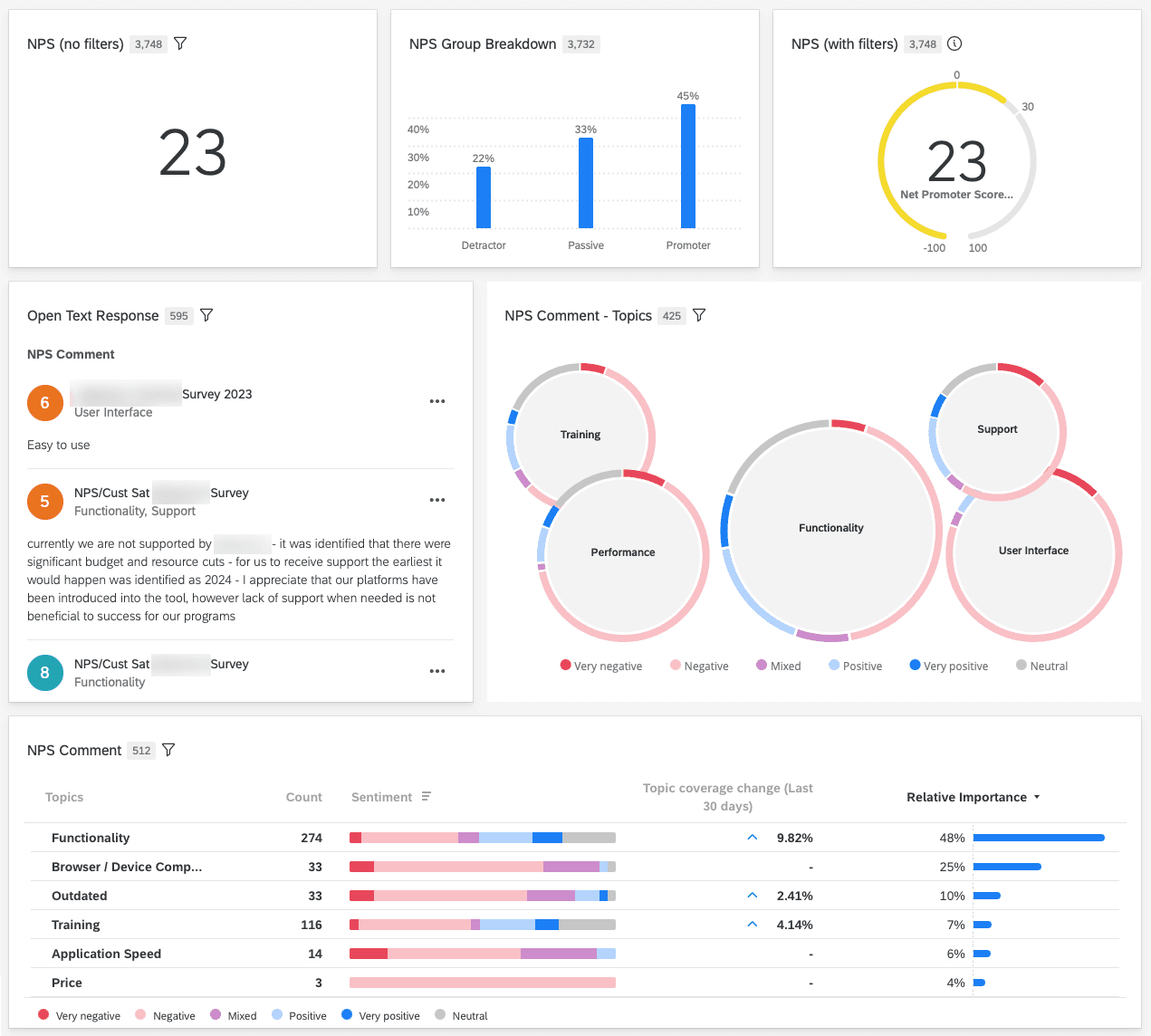
VoC & Topic Analysis Integration
3. Creating Executive-Level CX Visibility
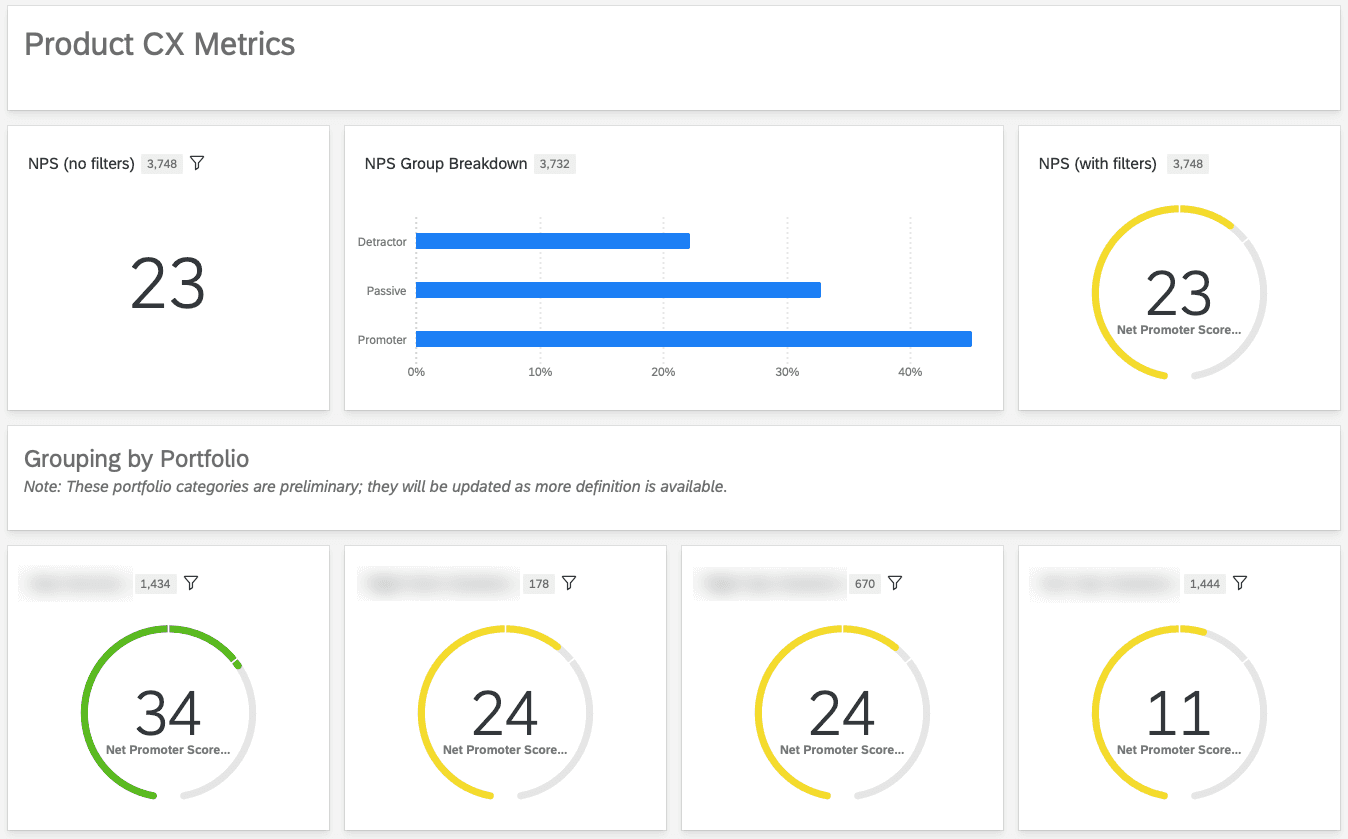
We built centralized dashboards within Qualtrics providing:
Portfolio-level CX performance views
Market-level analysis across commercial, military, and business aviation
Year-over-year trend tracking
Aggregate CX health indicators across the product ecosystem
These dashboards were used by Product leadership, Customer Success, Marketing, portfolio directors, and executives. CX performance became a regular part of executive reporting and was included in due diligence materials during the private equity acquisition of Jeppesen ForeFlight.
Enterprise CX Dashboard Framework
4. Maturing Product Analytics from Usage Tracking to Success Measurement
In parallel, I led efforts to mature product analytics using Adobe Analytics.
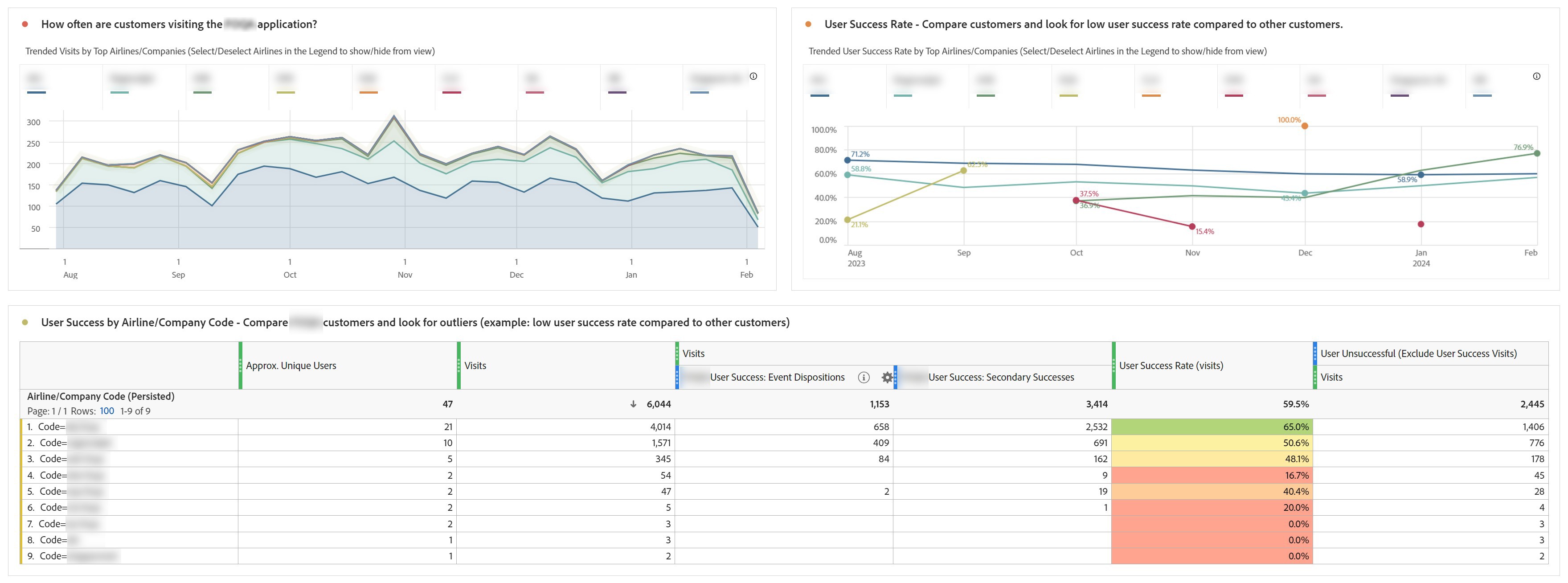
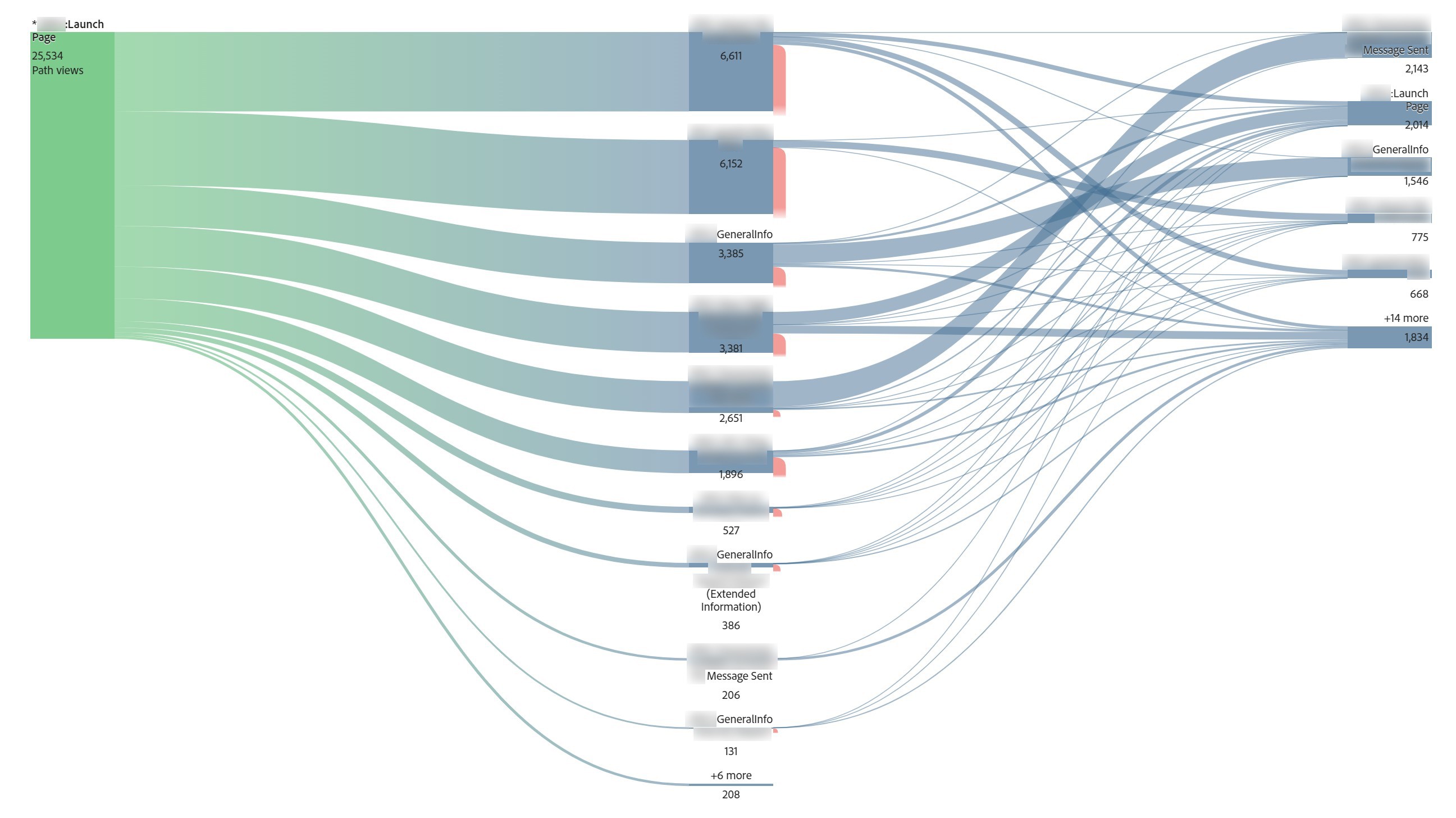
Rather than focusing solely on activity metrics, we worked with product teams to define user success metrics—specific actions representing meaningful value delivery.
This included:
Identifying primary and secondary success actions for each product
Instrumenting applications to capture those events
Repairing or improving incomplete analytics implementations
Supporting teams in interpreting and applying insights
We engaged approximately 20 product teams, with multiple implementations underway simultaneously, and began establishing a sustainable service model for ongoing analytics support and refinement.
User Success Instrumentation
Outcomes & Impact
Established standardized CX measurement across the company’s top 40 revenue-generating products, creating the first enterprise-level baseline for customer experience.
Built the most mature CX analytics program within Boeing Global Services, supporting commercial, military, and business aviation portfolios.
Delivered centralized executive dashboards providing real-time visibility into CX performance across products, portfolios, and markets.
Enabled leadership and product teams to incorporate customer experience data into roadmap planning, prioritization, and investment decisions.
Scaled the CX team and embedded analysts within high-impact portfolios while maintaining centralized standards and governance.
Advanced product analytics from basic activity tracking to defined user success metrics aligned with customer value.
Partnered with ~20 product teams to implement or improve analytics instrumentation and reporting practices.
Supported executive reporting and due diligence during the Jeppesen ForeFlight private equity acquisition, providing validated CX performance data to internal and external stakeholders.
My Role
I led the CX analytics organization, including hiring, mentoring, and scaling the team from three to five analysts, and defining the operating model, roadmap, and service structure for enterprise CX measurement and product analytics.
I established team processes including Kanban workflows, OKRs, structured stakeholder engagement, and documentation practices to improve delivery consistency and visibility. I introduced mechanisms for tracking team impact and began building a formal CX analytics playbook.
I partnered closely with Product, Marketing, Customer Success, Legal, HR, and executive leadership to ensure CX insights informed product and portfolio decisions and that data collection met privacy and compliance standards.
I also owned our CX and analytics tooling ecosystem, maintaining the vendor relationship with Qualtrics, collaborating with Procurement on Qualtrics and Adobe Analytics licensing, and running evaluations and proof-of-concepts for new capabilities to support program growth.
40+
Products measured
4
Core CX Metrics Standardized
20+
Products with Success Metrics