UX Leadership
Redesigning UX Career Architecture to Scale Craft, Clarity, and Retention

Context
Between 2021 and 2024, I helped lead and scale a distributed UX organization within Boeing Digital Aviation Solutions (DAS)—the largest and most mature UX practice at Boeing. The team spanned multiple product portfolios across commercial and military aviation.
I served on the DAS Design leadership team, reporting to the Director of DAS Design. Together, we focused on maturing our DesignOps capabilities using Nielsen Norman Group’s DesignOps Landscape as a guiding framework.
Given my background in teaching, I took ownership of Career Development, Skills Training, Education, and Hiring & Onboarding.
While we had strong individual designers, our organizational structure had not evolved with the discipline.
At the enterprise level:
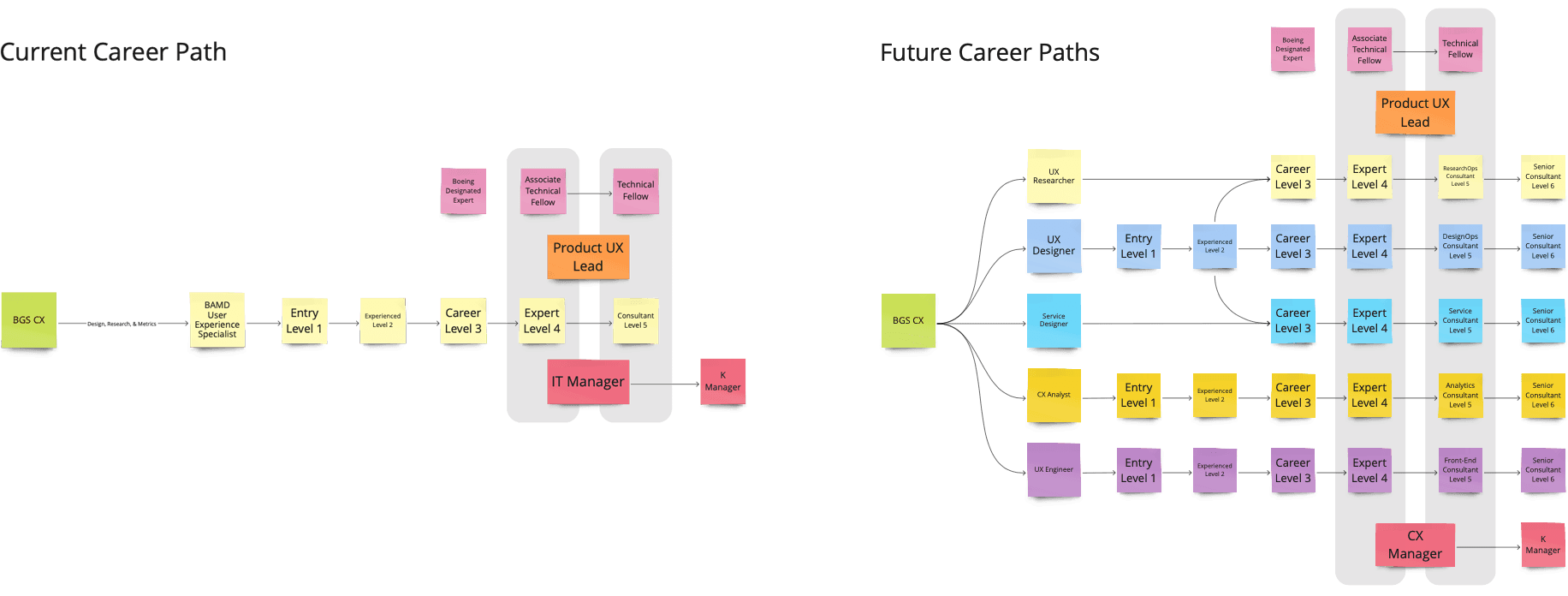
All UX practitioners were classified under a single job code: User Experience Specialist—a legacy, catch-all role description.
There was no formal distinction between Product Designers, UX Researchers, UX Engineers, or CX Analysts.
UX managers were classified generically as “IT Managers,” despite all having design backgrounds and operating as craft leaders.
The UX job family included only five levels, while many other disciplines at Boeing had six, limiting advancement and compensation growth.
There was no formal Principal Designer track to recognize portfolio-level design leadership.
As we worked to standardize design practices across portfolios—and extend influence into adjacent organizations with lower design maturity—it became clear that we needed:
Clear role differentiation
Structured growth pathways
Updated leveling criteria
A defined managerial track within UX
A Principal-level IC role
Modernized hiring and evaluation standards
Without these, scaling craft quality, retaining senior talent, and building long-term discipline maturity would be difficult.
Objective
The primary goal was to professionalize the UX discipline within DAS by creating a modern, transparent, and scalable career framework.
Specifically, we needed to:
Standardize role definitions and promotion criteria across four UX managers who shared headcount and promotion authority
Provide designers with clear expectations, advancement pathways, and visibility into what “next level” performance looked like
Create a viable Individual Contributor path beyond senior designer for those not interested in management
Modernize outdated HR structures that did not reflect contemporary UX roles
Balance local organizational needs with enterprise-wide impact, knowing that any changes to the UX job family would affect designers across Boeing
Without this work, designers had no clear understanding of:
Where they stood
What differentiated levels
How promotion decisions were made
What skills to develop to grow
The framework was designed to create transparency, fairness, and long-term retention while aligning multiple UX leaders around shared standards and decision-making criteria.
Approach
To professionalize UX within a legacy enterprise HR structure, I designed a system that connected role definition, capability mapping, hiring calibration, and skills development into a coherent whole.
1. Structural Audit & Industry Benchmarking
I began by auditing Boeing’s existing UX job descriptions and comparing them to adjacent disciplines such as Product Management, Software Engineering, and Human Factors Engineering. This revealed inconsistencies in level expectations, advancement ceilings, and managerial recognition.
I then benchmarked against contemporary software organizations (including IBM and Google) to understand how modern UX practices:
Structured Individual Contributor and management tracks
Defined Principal-level roles
Distinguished levels through scope, influence, and impact
Articulated competency expectations
This ensured the framework aligned with current industry standards while remaining viable within Boeing’s enterprise constraints.
2. Modern Role Architecture
I formally defined the roles already operating within our teams:
Product Designer
UX Researcher
UX Engineer
CX Analyst
For each role, I articulated six levels—from entry through Principal—clarifying:
Scope of responsibility
Expected outputs
Cross-functional influence
Strategic impact
This provided a foundation for consistent promotion calibration across four UX managers who shared budget and headcount authority.
3. Capability Mapping & Evaluation System
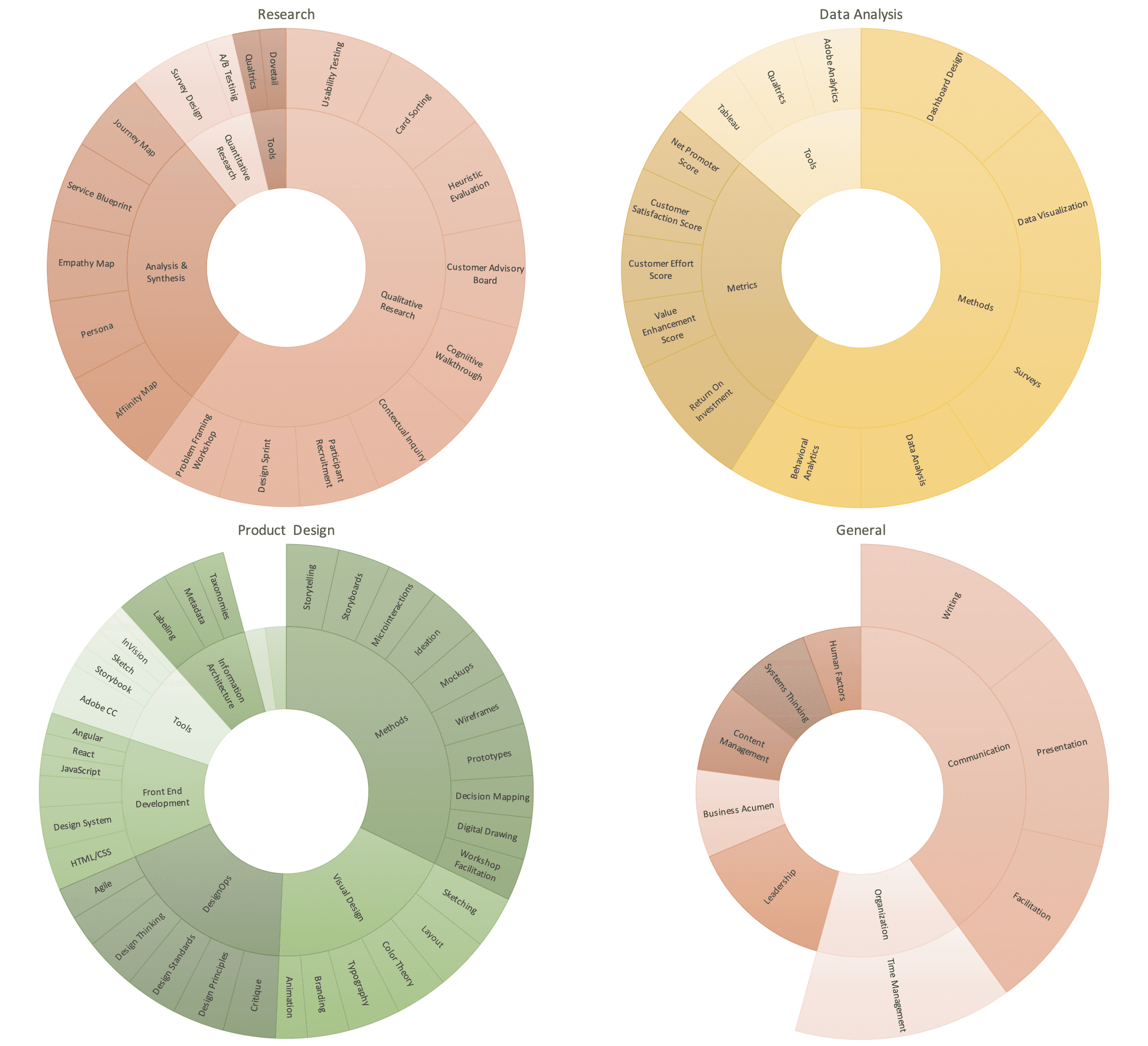
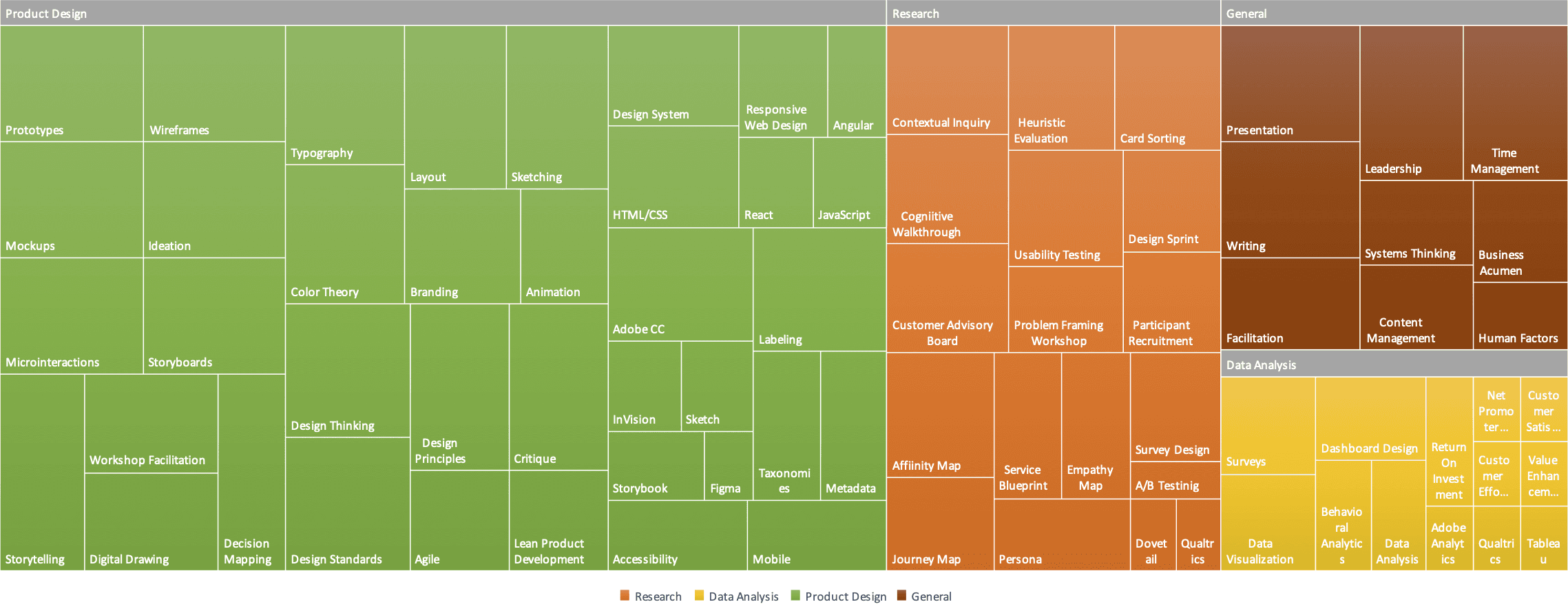
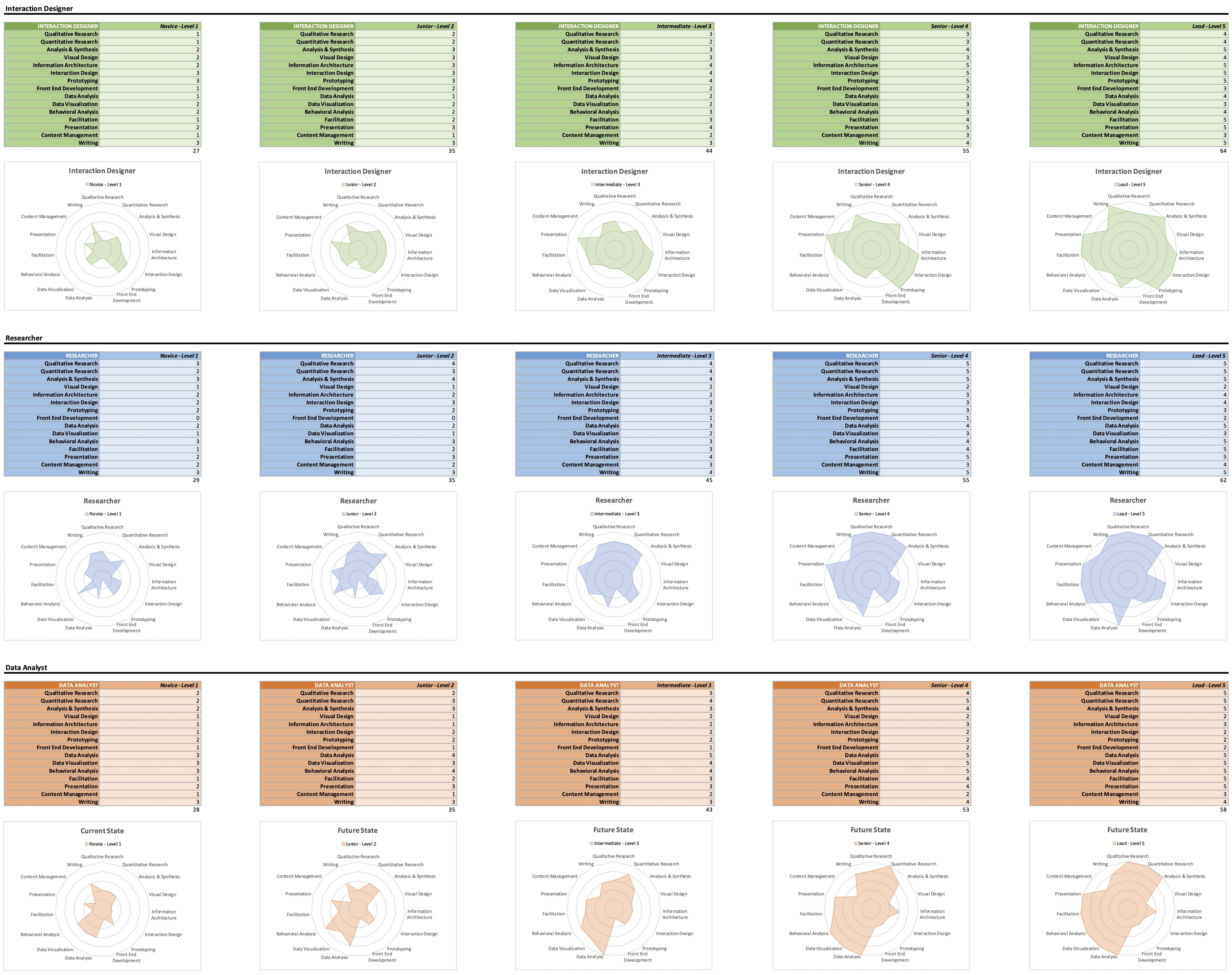
To move beyond title definitions and create operational clarity, I built a structured skills taxonomy.
Drawing from industry research, practitioner literature, and my own experience as both a design leader and educator, I synthesized a comprehensive capability model:
16 hard skills
16 soft skills
Five defined proficiency levels (0–5)
I translated this model into practical tools:
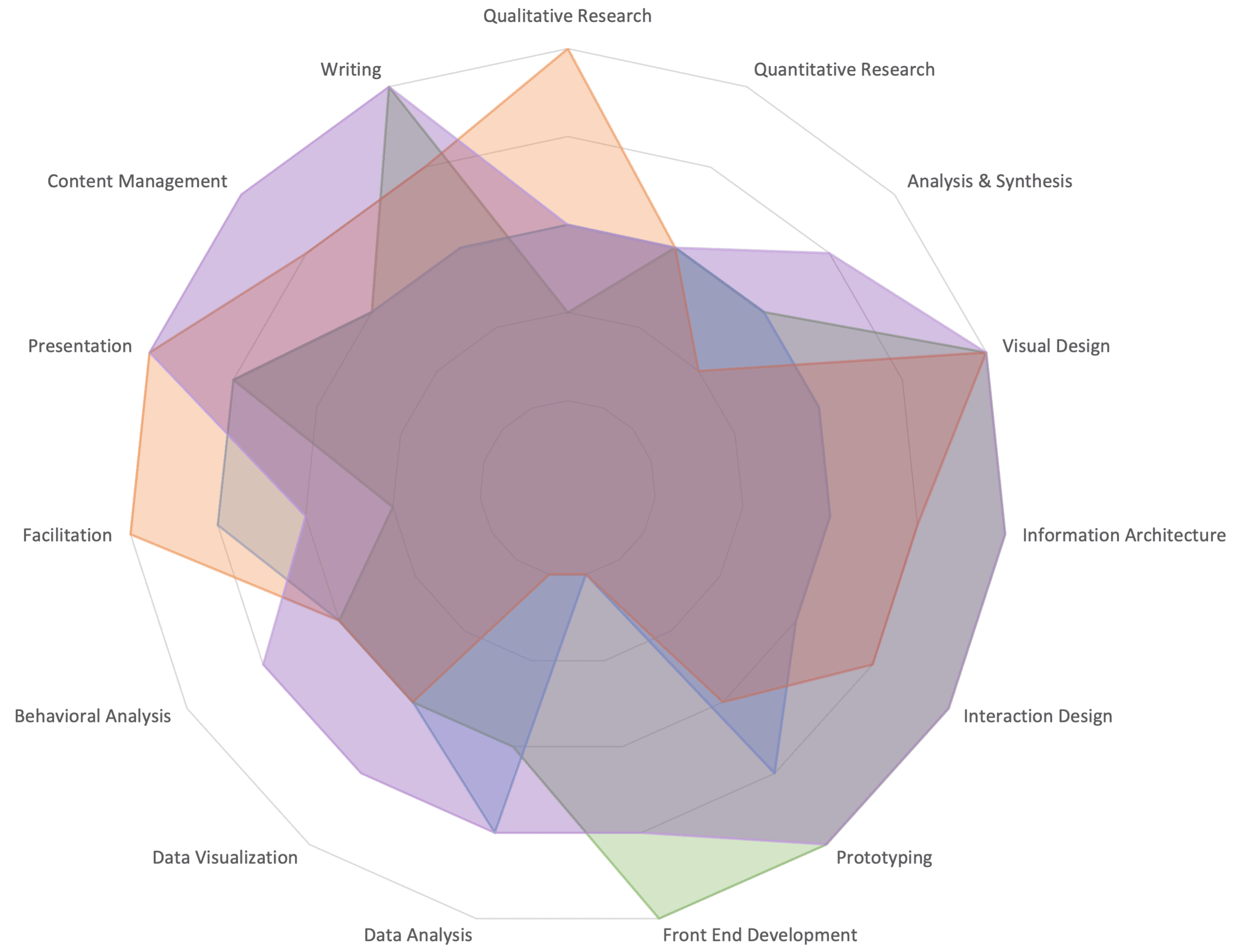
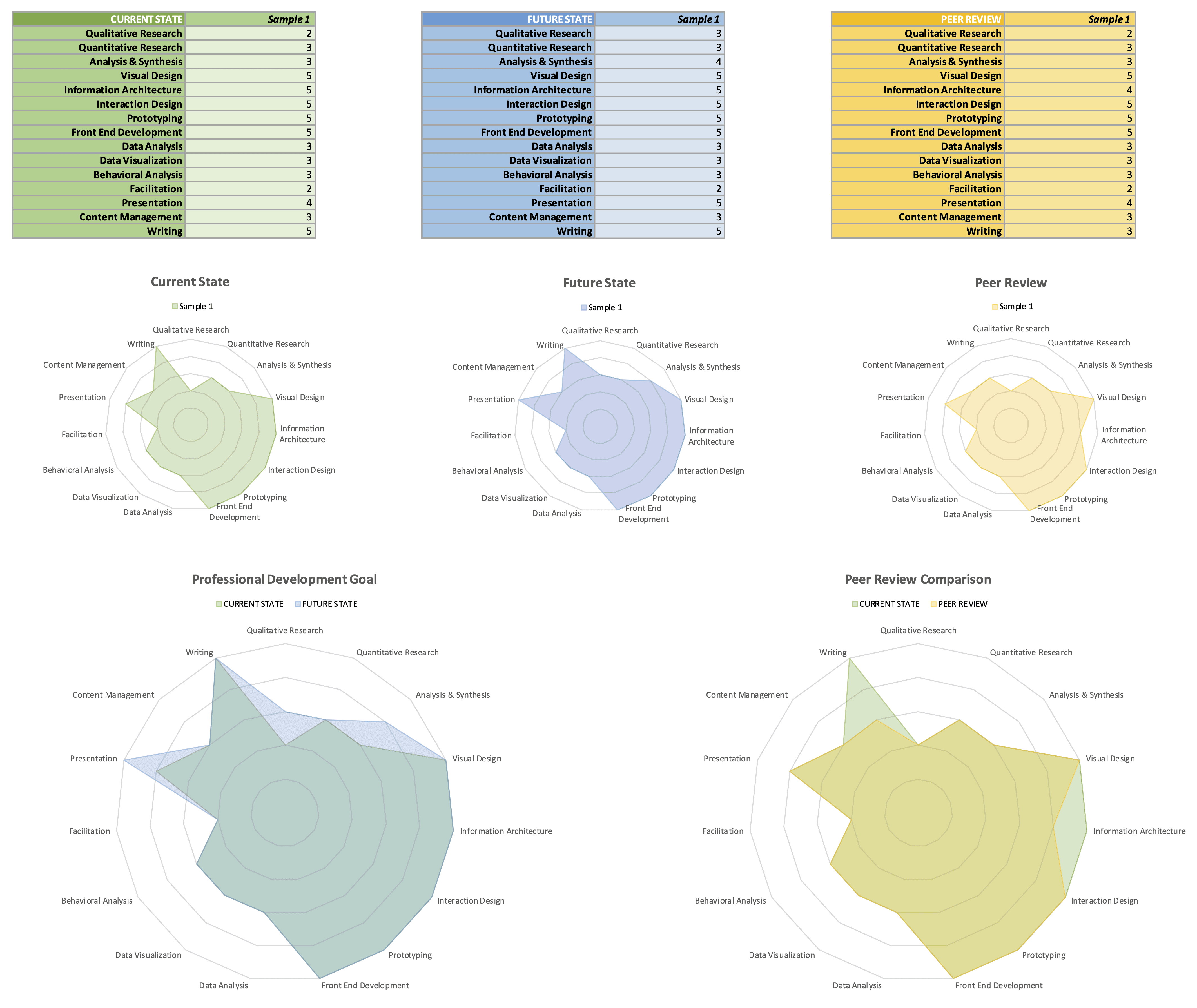
A self-assessment system that generated layered radar charts
Optional peer evaluation overlays to provide perspective
Future-state planning layers for development goal setting
A team-level visualization tool for identifying capability gaps
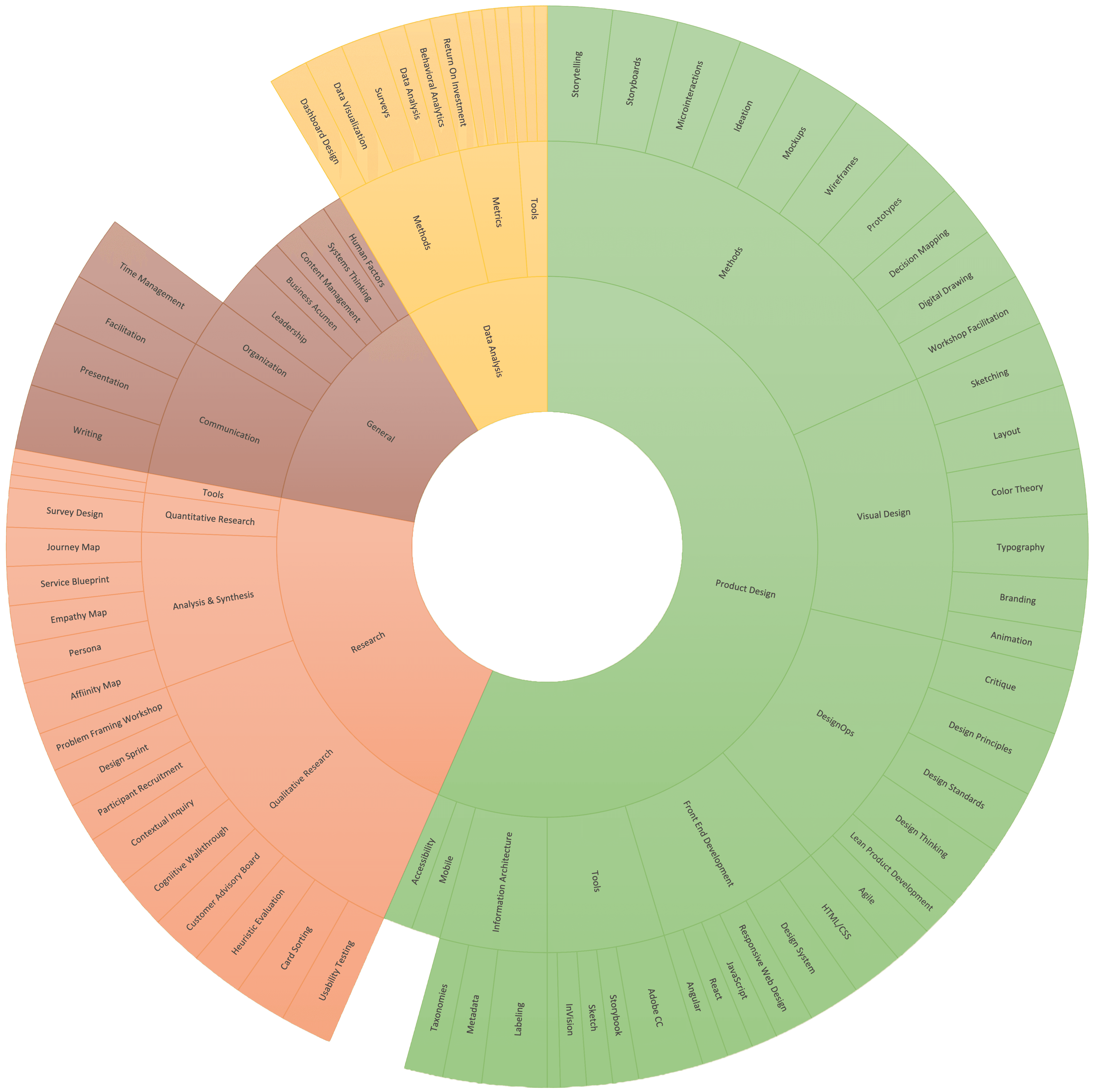
A granular “sunburst” breakdown of sub-skills to guide targeted growth
A structured hiring evaluation workflow used by interview panels
This system supported:
Promotion calibration
Development planning
Hiring decisions
Organizational capability analysis
Recruiting strategy
It turned abstract “craft maturity” conversations into structured, transparent discussions.
4. Learning Pathway Integration
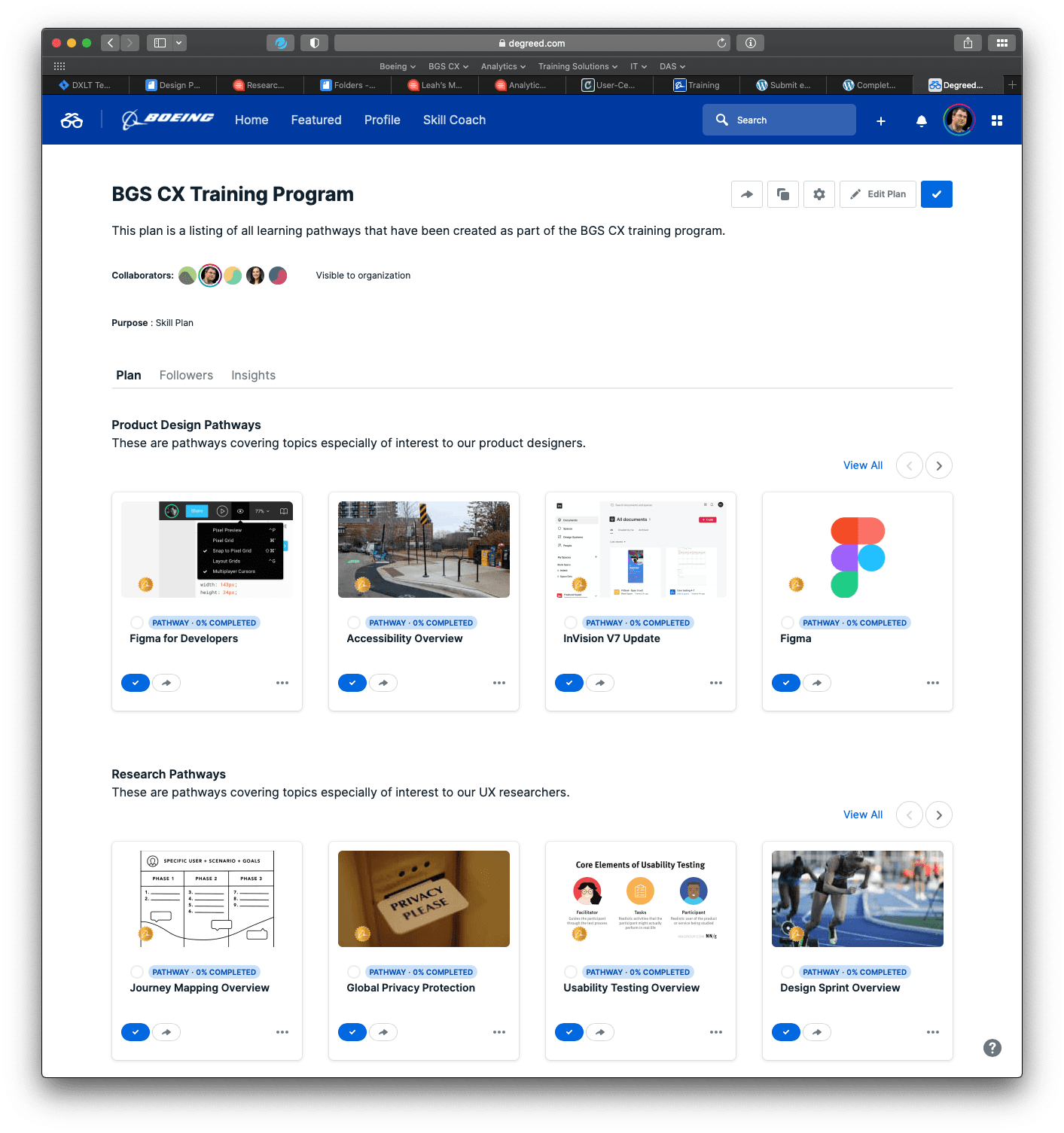
To ensure the framework drove development rather than just evaluation, I created over 20 structured learning pathways within Degreed.
Some pathways I designed personally; others were co-created through a small working group and subject matter experts.
This connected expected competencies directly to skill-building resources, reinforcing growth as a continuous process rather than a one-time assessment.
5. Iterative Deployment & Evolution
I piloted the framework with my own direct reports before expanding to the broader DAS Design organization. Adoption varied by manager, but it became a shared reference model across portfolios.
The system was refined continuously based on feedback and real-world use.
At the time of my layoff, I was actively prototyping a web-based version of the tool using GitHub Copilot to replace the Excel system with the goal of improving usability and scalability across the organization.
Enterprise Engagement
I engaged HR to explore formalizing:
Updated UX role definitions (Product Designer, UX Researcher, UX Engineer, CX Analyst)
A distinct UX Manager track
Addition of a Level 6 Principal IC role
Coordination with other UX practitioners in Boeing, recognizing that changes to the UX job family would affect everyone
HR response was highly positive. Leaders commented that they had not seen a capability model this robust within or outside of Boeing.
However, in 2024, HR began a broader skill code revision initiative, and shortly thereafter, organizational restructuring limited my ability to continue advancing the formalization effort. The subsequent private equity acquisition further shifted priorities.
While the framework was not fully institutionalized company-wide, it was actively used, iterated, and adopted within multiple portfolios during its deployment lifecycle.
Outcomes & Impact
Established a unified career architecture across four UX managers, enabling consistent promotion calibration and shared headcount strategy.
Increased transparency and trust by clearly defining expectations, levels, and advancement pathways for designers and managers.
Elevated hiring rigor through structured skills evaluation and calibrated interview workflows.
Enabled portfolio-level capability planning through team-wide skills mapping and gap analysis.
Integrated skill expectations with 20+ curated learning pathways, aligning development investment with strategic needs.
Influenced enterprise HR modernization discussions around UX job codes, role differentiation, and Principal-level advancement.
Contributed to broader UX professionalization efforts that strengthened organizational clarity and retention within centralized UX leadership.
50+
Designers Aligned
15+
Portfolios Enabled
20+
Learning Pathways Launched